


Turning Wounds into Wisdom: The Power of Storytelling with Sussi Mattsson
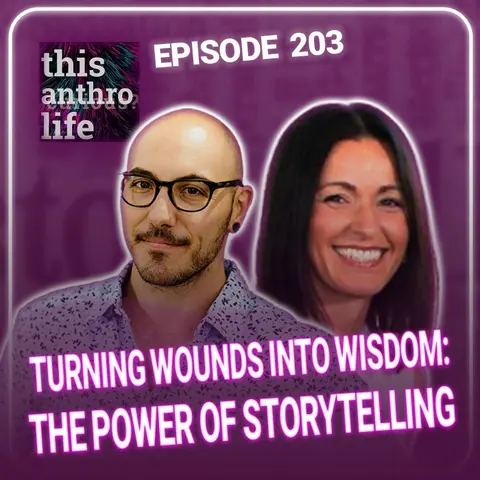
Have you ever pondered how acknowledging and reframing past trauma could be transformative?
In this riveting episode of This Anthro Life, we delve into the profound impact of acknowledging and reframing past trauma as the initial step toward healing....
 Apple Podcasts Apple Podcasts
 Spotify Spotify
 YouTube YouTube
 Amazon Music Amazon Music
 Audible Audible
 Spreaker Spreaker
 Podchaser Podchaser
 Overcast Overcast
 Castro Castro
 Castbox Castbox
 Podcast Addict Podcast Addict
 PocketCasts PocketCasts
 RSS Feed RSS Feed
 Goodpods Goodpods
 Podverse Podverse
 Castamatic Castamatic
 Podyssey Podyssey
 PlayerFM PlayerFM
 iHeartRadio iHeartRadio Apple Podcasts Apple Podcasts Spotify Spotify YouTube YouTube Amazon Music Amazon Music Audible Audible Spreaker Spreaker Podchaser Podchaser Overcast Overcast Castro Castro Castbox Castbox Podcast Addict Podcast Addict PocketCasts PocketCasts RSS Feed RSS Feed Goodpods Goodpods Podverse Podverse Castamatic Castamatic Podyssey Podyssey PlayerFM PlayerFM iHeartRadio iHeartRadio
Have you ever pondered how acknowledging and reframing past trauma could be transformative?
In this riveting episode of This Anthro Life, we delve into the profound impact of acknowledging and reframing past trauma as the initial step toward healing. Through the wisdom letter writing method, we uncover the process of identifying life lessons learned, enabling a deeper understanding of core values and beliefs. Discover how sharing our stories brings hope, fosters collective healing, and transforms leadership styles in the workplace.Join us in this engaging episode as we delve into acknowledging and reframing past trauma as the pivotal first step toward healing.
Join us as we explore how sharing our stories brings hope and catalyzes collective healing, shaping our present and future. Together, we'll explore the profound impact of storytelling in creating a more empathetic and connected world.
Timestamps
0:00 Healing, leadership, and personal growth.
1:02 Healing through writing and acknowledging past traumas.
10:52 Healing through self-reflection and giving back.
4:39 Healing through storytelling and collective wisdom.
18:29 Storytelling, hope, and mental health.
23:25 Storytelling and leadership in the workplace.
29:11 Workplace trauma and leadership styles.
33:58 Using storytelling for personal growth and healing.
Key Takeaways
- It's essential to acknowledge past traumas to initiate the healing process effectively.
- Understanding how past experiences shape current self-awareness is crucial for personal growth.
- Transforming the story we tell ourselves about past pain is key to releasing it and moving forward positively.
- Viewing traumatic experiences through a different lens can uncover valuable life lessons and aid in healing.
- Following a structured process, like the 5-step letter writing method, provides a roadmap for healing and growth.
- Sharing personal stories not only aids in personal healing but also contributes to collective understanding and empathy.
- Storytelling, through various mediums, is a powerful tool for healing and connecting with others.
- Addressing past trauma in leaders is essential for personal and professional growth, impacting leadership style and workplace dynamics.
About This Anthro Life:
This Anthro Life is a thought-provoking podcast that explores the human side of technology, culture, and business. Hosted by Adam Gamwell, we unravel fascinating narratives and connect them to the wider context of our lives. Tune in to https://thisanthrolife.org and subscribe to our Substack at https://thisanthrolife.substack.com for more captivating episodes and engaging content.
Connect with Sussi Mattsson
Instagram: https://www.instagram.com/sussi_mattsson/
inkedin: https://www.linkedin.com/in/sussi-mattsson-21279a3
Connect with This Anthro Life:
Instagram: https://www.instagram.com/thisanthrolife/
Facebook: https://www.facebook.com/thisanthrolife
LinkedIn: https://www.linkedin.com/company/this-anthro-life-podcast/
This Anthro Life website:
0:00 Imagine being eight years old, standing on the edge of a decision that could seal your fate, the line between a life of fear or a bold leap into the unknown. Welcome to the Santhra life. I'm your host, Adam Gamwell and our guest, Susie Mattson took this exact journey, and as an adult, after journeying back into childhood, unearthing the secrets buried deep within trauma and transforming them into strength, hope, and a pathway forward. Susie's on a mission to help others turn personal trauma into collective healing. As the founder of the global movement from Me to You, she offers a pathway to healing through a method called wisdom letter writing. She's been a guiding life for people globally, helping unearth their unique stories and transform them into cathartic healing narratives.
0:42 Today, she joins me for an enlightening conversation about healing, leadership, empathy, and turning trials into triumphs. So buckle up as we dive in into the intersections of our past, our presence in our future will surface with newfound wisdom and the power to redirect our life's trajectory, well, the journey together. Welcome to this central life. The reason why I started for me to view a global movement was that I found myself in two thy twelve very successful in my business, yet not in my personal life. I felt I had no meaningful, purpose fulfilled life. So I understood that I needed to go back in time to connect the dot and revisit my childhood trauma in order to move forward successfully. So what I did was that when I was eight years old, I found out that my father was about to tell me to strangers in a foreign country, and this was just six months after my mom passed away from cancer. So in order to not board that plane straight to Hell, I come up with the idea to run away from home. So I did that, and in twenty twelve, processing my past, I was not able to identify myself with that little kid who was eight years old and who was so courageous and brave and followed through with actions. So I decided at
2:15 least to write her a letter and say thank you. And that was a transformational event that took place when I literally thanked her for saving my life. So that was the starting point. How writing is healing, and I was really interesting in what specific key factors do we need to have in a healing letter addressing a past trauma. So after eight years of studying how writing is healing, I created this now proven method for step method out there with the letter writing. That's the story behind the creation and why we are here today.
3:00 Thank you for sharing that, And I know it's a an incredibly heart wrenching story to think about. You know, how does how do especially as kids, how do we deal with these these you know, in this case, like very traumatic moments that are they're way outside of our control. And I think something you say there too that that really strikes me too. Is this the power of you know, finding an ally, even if it is oneself in the future looking back, you know, to to oneself as a child, and how important it is to have either somebody standing with you, you know, standing by you, and to kind of acknowledge the work that you're doing. You know. And kids can obviously be very brave in moments, and sometimes they don't recognize it themselves right there there, maybe in survival mode. But then you know, when when realizing that that one has an ally or someone to standing with them it can make all the difference. And so I think that that's a really powerful thing to kind of contemplate on.
3:49 And So one thing that you said that stands out to me that I'd love to think about is that there's an importance of connecting the dots, as you said, right to who I am today and how I how I got there. And so is that an element that you know, when you're working with folks and helping them kind of coaching them into into writing wisdom. Do do you find that that's a challenge point that a lot of people have that they don't quite know how to or either are uncomfortable kind of connecting the dots to their past to where they are today, And like, is that one of the challenge points as I try to figure out, you know, how I can either move forward or like you know, become a more wise self those you know, connecting those dots as an important part. So how I guess how important is thinking there's someone's past for their present in the future. Well, usually I have coaching clients around the world. Usually our subconscious mind is creating those tools sucking I'm sorry to say, but soul sucking survival pattern and and they become our normal. And then we also subconsciously build those invisible walls around our heart because we we believe they will kind of save us, you know, from pain. And so the first thing that anyone needs to do is to acknowledge exactly what happened to me, and that is that that is absolutely the first step, because if we cannot acknowledge it because a lot of people just closing the door and when we were closing the door doesn't exist,
5:25 or are we not talking about it? Or I have had some wisdom writers it is a family secret. By becoming a wisdom writer, they actually have revealed a secret they have been keeping for themselves for many years. So the first thing is absolutely acceptance and acknowledgment that this happened to me. And I think that when that first step, when we take that first step, and we know that our core values and our belief system, both of them leads out lives, and both of them are highly affected by the life lessons we acknowledge. And if we are not able to acknowledge the trauma, then we cannot acknowledge the life lessons. So that is absolutely the first steps to do.
6:15 And because when we can acknowledge the life lessons and growth pick place, and your level of self confidence will increase. So we find ourselves in now a totally different platform and creating our new life, a new day to day life. I think that's that's a really great point too, and that part of it is understanding in acknowlogy what took place, and then otherwise it kind of we do get stuck in that kind of circular pattern, right, as it were, Like we may find ourselves kind of either be living a moment or just finding ourselves stuck at some other point in our lives. And so, you know, I agree in terms of like figuring out that that kind of anchor point in like understanding and acknowledging what took place, and so that one can in fact release it, right, I'm curious to and as we think about that in writing. You know, you mentioned that there's a number of also factors right for wisdom writing, and so I'm curious, you know, in terms of the process itself as you developed this, like can you tell us a little bit more about the other kinds of factors that we need to have in order to kind of have a successful practice kind of excavating one's one's life and then and then getting to know where I was and then how I can move forward with that. What are some of those those factors that matter? Yeah, because when we when we experience pain, we kind of have a different storytelling to ourselves. We are changing the story because our pain is it's not a very good advisor in any way. So we need to
7:45 reframe the experience. Whatever happens to us, we need to reframe it. And when we do, when we reframe the experience, we also discover the wisdom from it. When that happens, we are able to transform our relationship to the trauma. And those two key factors are really important. That's the first step because when that happens, then we can create you can create your own bridge, your own healing bridge between your past to your present and to your future. So the first step is acknowledging and reframing and transforming your relationship to the trauma. And then is the life lessons. We need to identify the life lesson And in this specific method, we have three different categories of life lessons that we need to identify, and the first one is identified life lessons you've learned about yourself and then the life lesson you've learned about others, and then finally life lessons you've learned about the world in general. And as I said before, when that happens, then then you know how this has shaped me and you can easily understand who you are, where you come from, and who you want to become. Because sometimes when we raise awareness, it doesn't mean that we like the person that we see, and we realize
9:16 that, oh, if I want to move forward, then I want to create more happy life. Then I want to go in that direction, and what do I need to do in order to move towards that? And also remembering that none of us can go through life without any pain. I mean, the road of life give us some bumps, and so we need to be aware of what happens externally how did that affect me internally? And that is obviously also one of the steps. And when we have identified the life lessons, it easily to be easy to turn that into piece of wisdom. And so many wisdom writers are our experience this beautiful gift of giving back to others that are currently in the same situation that they have overcome. And then the last step is about expressing love expressing what you're grateful for. And also the big part is the forgiveness work. So those are the key factors in the wisdom letter writing. And we need to also remember that there is a specific order to do that because we want to succeed in every step instead of feeling sad or cry, and we want to empower ourself that this is my story and this is what I learned, and then it's more easily to give back and to do the work of forgiveness, both to yourself and to others.
10:52 And it seems to me too that there's a lot of value and help and kind of knowing that there's a step wise pattern, right, that there the pathway that you go through as part of this process too, because oftentimes, as if folks are trying to figure their lives out right or try to kind of put some pieces together from their past and figure out, you know, how they want to move forward, if you don't have a map, it can be very difficult, right, we don't have a compass, like what's kind of guiding that that forward? So thinking about this also, I think is important, right that we know that there's a certain pathway we can we can lean into, right we can follow that a specific way to get there. Yeah, because it's really easy when you're revisiting a past trauma. It's easy to feel that pain again and to feel the shame or feel being guilty or play the victim card or whatever negative emotion that could bring, and that could easily turn us down to this dark valley of the fearfulness or hopelessness, you know, And so we need to be aware of that, acknowledging and accepting what happened. It's a way out of the valley of the trauma.
12:03 We're not going to be stuck there. And we have currently we have WIST writers all around the globe and it has been like amazing and beyond results all of them, so really exciting for the for the movement. Yeah. I think that that's beautiful too, and it's and it's great to see and to know that that it has grown into such a global movement, right and seeing that folks around the world are are finding, you know, wisdom and being able to connect with themselves with others too. I think that that's a really interesting piece too. I Mean, I'm biased because I'm an anthropologist, but you know, I think it's always interesting to then think, even as we think across culturally, right, and we're looking at working with different folks around the world, as you've said that, there are also still elements that we share as humans, right, and the obviously emotional things that we go with and then wanting to have a sense of understanding who we are in our place in the world. You know, these these pieces are are quite important.
12:58 So it's interesting that even if the expressions themselves might be slightly different in different cultures, there are still things that we hang on to as people, right, and that we want to be able to share. And something that you said as we're kind of walking through the different processes that stood out. I think this is another really important point is that you're noting as folks kind of go through this pathway too, especially as I get towards the ideas around expressing love and expressing gratitude, that there's an element of wanting to also give back to others too, right, So it's not just about you know, I mean, it is a very important part about unlocking myself, right, But then part of that too is then I'm able to kind of give give back and kind of pay it forward to others also, and even I mean, I see that in your own work too, right, that in terms of writing a letter to yourself originally and then kind of building up this process, you know with global movement wisdom writers and connecting with other people. But then also you know your work as an executive in workplace coaching too and helping bring and pay that forward. So I guess I'm curious to hear a little bit about this in your story and your process and moment to recognizing that as I heal myself, that I can also help others find healing for themselves too and kind of giving back. So I'm curious how you connect these these these dots as it were, right and healing oneself and wisdom and then bringing that and giving back to others as well. So most wisdom writers are joining this movement because they want to give back, and they're using this platform to share the stories. And there is a beautiful gift. There's two beautiful gifts, as you said, Adam, in the wisdom letter writing method. The one
14:31 gift, the first gift is obviously to yourself because you're healing your trauma, your past trauma. The other one is obviously giving back to others. So we are collecting those wisdom letters and people are standing in from all over the globe, and we are collecting those in a book collection, and currently we have twenty nine different titles well. And so for some people that specific book will actually act as a survival guide, and for some people it will be like a tremendous treasure of tools that what can I do to overcome and what can I do to create a better and happier life for myself? So I think the mission for me creating the for Me to You movement was that we need to collectively heal. Not just I can heal my trauma, you can heal your trauma, but we need to collectively heal because what we are seeing all around the globe is at the core that really matters. We are all the same. We all want belonging, we all want happiness, purpose fulfillment, the meaningful life. We all want love. So we are more We have more commonalities than differences. And when we see the pain and how we handle pain, we can see from the letters that we are receiving that a
16:02 woman in India who has been raped has the same issue as a woman in Canada who has been raped. We are struggling, we have the whole specta of dealing with pain and emotions. We are totally the same. So collecting those wisdom letters in a book collection and hopefully we can spread that and and how at least a million of people healing past traumas and and building their own bridge and there and there really is something powerful about the powerful about the power of storytelling. And you know, as as humans were wired right to tell stories and to hear stories. And that's I mean how that's how we passed down you know, histories and legends, but also just you know, how we shared how to live in everyday life, you know, for for the majority of I mean still today, I mean for the entirety of human history.
16:56 You know, as much as we you know, say, we've written down these policies and these laws, like you know, most of us express and explore and understand life through stories. And so it's in this case too, like a good testament of like why it's impactful and powerful and important to them be able to share those stories, especially of kind of coming through trauma and into healing with with with oneself and then with others too, because it is something that we can deeply resonate with and as you're saying too that even as we're looking at different communities across the world, right, we are seeing that these needs for belonging and purpose and meaning in our lives and that stories are a way to help us do that. I think what's really interesting too with with your work is you're doing this through through Wisdom writers and for me too movement. But then also you've done storytelling and other mediums, right You've you've you know, worked on some documentaries that you know that have been nominated for Memories, which which is great, and also the subjects themselves in terms of you know, making films about Jack Canfield and Jay Abraham and you know business coaches and uh and guides and folks that are helping themselves and others are also kind of find kind of healing and pathways forward. So I'm curious about But storytelling to you, right, it's something that both as a as a movement that you're working on, but then also you know, choosing to tell stories through film also, you know, so tell me about I guess the role of storytelling in your life and you know why you've and how you're exploring it in different mediums and and kind of what you're thinking in your processes in terms of like, how do we tell stories the most effective way? Why would choose film for some documentary, Why would we choose letters for another version of writing? You know, I'm just kind of curious about this, this idea of how you how you approach storytelling. So I think we I think
18:30 we need to go back in time for my childhood that I was. I grew up super poor. I mean, we didn't have enough money for a lot of things. But in school, I remembered that we read. My school teacher she read books, and that was my first, my first contact with storytelling. And she she was the first one who read Picked the Long Stocking and there is a specific big book about people be long stuck and running away from home. And that was one of the things when I was eight years old, and I found myself in that situation that I thought, well, if she can run away from home, then I can run away from home. And so I think that when we share our stories, we bring hope to other people. And I think that is the most important thing, because hope is hope keep us moving when we feel stuck and when we feel sadness and when we feel we are in that dark place, hope is the only thing that can bring us together and make us take a step forward, even though if it's just a baby step, is just a step forward.
19:49 So I believe that that is the one key element of storytelling, that we can bring hope to each other. We can also inspire each other that if I can do it, you can too, and also tell the world that you are not alone. So I think it has been part of my DNA from when I was a little kid that the storytelling or reading the books in school was a way for me to take myself to a better plate, to a happy plate, and believing this strong belief that that could be a better life somewhere and that I was worth it and I was worth saving from being boarded to that on that plane to strangers. So I totally believe that is that is the one thing then my whole life through the coaching business I have had my company for over two decades now, I believe that when my coaching client calls me, there is all wigh the story that needs to be told.
21:03 Everybody has a story that needs to be shared, but sometimes they don't know it and they stay to me, well, do see, we need your help. We want to take our business to the next level. Well, we need to take you first to the next level. So I believe that everybody has a story, but we are not aware of it, not always aware of it. Then when kind of if we are sharing it through the Wisdom letter or we are sharing it through a film, that's just different media. And for me, when I tested out this four step method to my coaching clients, I self kind of selfish that only only my coaching client had access to the Wisdom letter writing method. So I thought, I need to bring this on the larger scale in order for more people to be able to use this and benefit from it. And that's the reason for the creation of the shoal Media you app and people can easily download the app and create their own and write their own wisdom letter. So I think using different media is also finding out your purpose. Who do you want to reach who?
22:22 And if you My mission is to reach the larger scale of people on a mission to help one million people become wisdom writers, and so I need to choose a media that is connected to that. And I'm so happy for the app because it will address a lot of mental health issues and a lot of tool that people can easily use in the day to day life, because a lot of people struggling with for instance, happy happiness. And if we are able to create more happy people, then we are going to make the different kind of decisions. So and making the films was an amazing experience. But personally, I would say that if you have a story, if you're listening now and you have a story, share it. That's that's absolutely my message.
23:17 And and the plus there too, of course, is that we can we can we can share the app and folks can maybe share their story story there, which I think is great and I really appreciate the the you know what you said there as we think about, you know, how do I tell my story? Right? Am I doing it through writing letters? Am I? Am I on there for me to you app? Working on a wisdom letter? Am I working on a short film? Am I making a podcast? You know? Like whatever it is, it's it's it's important to recognize that how we tell those stories is a way to help us kind of figure out our purpose right and who we want to reach in what what kind of tale that we want to tell? I think that's that's a really great point, you know because especially a lot of young people too coming up today, like have come to come of age or coming of age right, growing up in the world of there's all social media, there's you know, digital technology, you know, that's at everybody's fingertips now. So it's easier than ever to to kind of create a story, right, you know, whether it's an Instagram story on a social or you know, make a YouTube video or you know, put a podcast out there. But it's interesting to kind of think about why do we do that? Right? And I agree with you that everybody has a story to tell, and oftentimes if you ask somebody why do they make tell a video, why are they making a podcast, or why they're writing a blogger writing a book. But I think something that you said that's really important that I don't hear people say a lot is that they're thinking, like they're trying a media amount to figure out what's the purpose of telling that story, right, Like, what's the way, what's the way to tell that story that's going to feel best to me or feels like I'm going to be able to kind of get out the message that I want to understanding how and who I want to reach. And so I think that's
24:49 a really important point that you that you brought up too, that we have stories to tell, but then how I tell that story, you know, is me trying to figure out the purpose of that, right, the purpose of the story itself and who I want to reach. So that's really interesting. Do you find that, you know, when working with different clients. Sometimes it can be somebody's personal story. But you know, obviously, I know you do a lot of work with business coaching as well, and and as you know, as corporate clients kind of figured this out, it seems to me too that like having worked in corporate worlds and you know, I work, I work for myself now, but you know, still work with a ton of clients also. But it's like in these different places, like the workplace can be a challenging place to be a human. You know, ironically we spend the third of our lives there, right, But it's like and part of that is like how do I self express and how do I kind of be in this place that has a slightly different set of rules that don't always totally make sense. There's a hierarchy of power, right, but whether you have your boss, you're a supervisor, that can be a little weird. So I'm just I'm curious, you know. You know, we have kind of the pathway with with wisdom writers. Like when you're working with corporate clients too, is is it the same kind of process? You know something you you said a bit ago too when someone says, I want to take my visit and to the next level, and you said, well, we gotta get your story first, right versus the business's story. So tell me a bit about, like, you know, is there anything weirder about the workplace that we should think about in terms of being humans and trying to tell our stories. Well, my coaching clients are executives or leaders in any position, or entrepreneurs, and it's really easy to see their leadership style depending
26:26 on what kind of trauma they had, because if we are dealing with unhealed trauma, they one hundred percent totally as sec your decision making, your core values, your believed drip, then how you are as a leader, how you are as a partner, as a father, as a mother, whatever roles you have in your life. Unhealed traumas will affect you. Then we have two different kind of leaders. There are those who who can easily acknowledge and not closing the door, and they're not passing on the leadership style because they have some subconscious triggers that they're not aware of. And there are the other ones who need some help. If I just say that, who need some help because we can see in your leadership style that how you treat yourself and how you treat your employee is always a pattern, a trigger pattern from a past trauma. And I have seen firsthand and experienced with coaching clients that when we have addressed the past trauma, the change, there is a transformation that happens and they're no way they can go back to be the same kind of leaders they used to be because something happened within them. And when we raise awareness and understand ourselves better, where we come from and why, then
28:03 we are more able and motivated to change. And change can only happens when when we acknowledge something. So it's really interesting to see in the workplace or in a company the different leadership leadership styles. And I have had different executives who said, well, I walk my talk. Uh uh no, you're not. You're walking, but you're not walking your talk because they don't know that what they talk is because that had changed over time because it has been affected by the trauma. And so we need to go back what is your core values and how do you express those core values? How do you walk literally walk your talk. So it's really interesting and it's amazing to see what can happen with the productivity and the happiness and people feeling seen and heard by their leaders when the leader transform and and heal their past trauma. Hmm.
29:11 I think that that's a great point. And I'm imagining there's many people listening or watching right now thinking, yeah, man, my boss, my boss is kind of crazy. You know, they need to take this this uh this this series in these workshops, you know, is is they kind of think about how how do I how do I make my workplace better? You know. It's like it's I think it's an interesting point too where it's that, yeah, you know, even to come back to something that we were talking about at the beginning, where you you know, when you're writing a letter to yourself as a child, is that oftentimes like when we're in a in a moment like in this case, like a lot of you know, there's there's a group of leaders that don't understand that they have some unresolved trauma and that's that's shaping their their leadership style, like recognizing this that, well, we must learn to trust ourselves. It's also helpful to have an external partner, person, colleague that can say you actually have a blind spot and that I know it's going to sound painful to say this, but you know, hey, you might want to go talk to somebody about your anger management, leadership style or whatever it is. And so this idea is interesting too, where it's like, you know, healing oneself is also in relationship to others too, you know, in that like in a workplace of course, because we're together working on a project with other clients, with other folks that because we're brought together for a common purpose. That I always wonder about this too, like how can we help instill in workplaces more kinds of accountability?
30:29 Right that they that it's okay to have these kinds of conversations, right, that's okay to kind of talk about our not styles of being I guess, but just like you know, whether it's leadership styles are just like acknowledging when something is a bit challenging, you know, and I think that that is towards the goal of making and writing more pathways for happy people, you know. I think you know a big piece of it is this too. It's like, since we spend so much time at work, it's like helping leaders kind of recognize that, you know, and then like, but also then if your leader doesn't, what the employees do is their way to be like, hey, leader, we're going to We're going to refer you to to Susie here to help the help think about this this question at this point. You know, how do we like also make it okay to have those conversations? You know, I think it's really important because especially in the workplace at home also do really but you know, recognizing that like what are we carrying around that we may not notice in ourselves that other people might see that we could we could actually find a pathway forward as well. So I'm curious, like, does does that happen? You know? Sometimes do you know folks might come to you or may join the app or join the program and kind of say, yeah, I realized that my spouse was kind of pointing out something to me or that I've felt something weird at work, and then it turns out that you know, I need to resolve something. But you know, I'm curious about that is that Do you see that kind of pathway of people kind of coming to this recognizing through others that I need to make a change. Yeah, because some people are not aware that they're bleeding on other people. They don't know. And so I think the best thing about a coach in my role is that for some leaders, for some executives, it's
32:00 lonely and if they have a corner man, you know, somebody in their corner who can be brutally honest and say what they need to be, what they need to hear, not they what they want to hear. I think that's a difference. And and and then trust this bill and when we are helping, when when I'm helping them connecting the dogs that you are acting like this or you are handling this situation like this because of and then we're looking back and and they're usually reacting with Wow. Now I understand, because what I have heard from many wisdom writers, from executive coaching clients is that there is a feeling of freedom that brings peace to the heart when they address the past trauma and and when you you can operate your leader role from a peaceful platform, then you are totally different kind of leader. So I think most of the coaching clients can see and experient that when I'm a better person, when I'm more happy, when I'm bringing peace, and when I'm aligned with my soul, then I am a better person, a better human to my environment, doesn't matter which role I have in life. And I think that
33:34 we create those half day, a full day or two days workshop as well for the employee because when we can understand each other better, then we also get along better. If I understand that you have been through this and this, then I can understand that you have a respond to a different issue. And also working a lot with triggers because sometimes we're not aware of our triggers. So identifying the triggers and our automatic responses to the triggers, that's really important work that we can do in the workplace. Yeah, I agree with you. I think that that's a really important point. And do you find that is I guess, like do you do you have any advice for folks as they try to figure that out? Right? Like, how how can I begin to recognize some of those triggers. If I if somebody, for example, comes to me and says, I have some feedback about a project that we're working on, and them immediately freeze up, and I may not notice that I do that, right. You know, how can how can we help folks like say to kind of begin to recognize when when some of those triggers, those triggers happen to themselves. Through all those years of thousands of coaching clients, we have seen when we when we do our study and statistics, we have seen that every challenge it always comes down to three things.
35:00 Your self awareness, your mindset, and your attitude. So doesn't matter what kind of problem you have, what challenge you have in a workplace, it always one of those three or all three, that's what you need to work on. And so I have developed this specific program it's called the Big Three your self awareness, your mindset, and your attitude. Because your mindset, you take that with you everywhere. So you need to be pay attention to your mindset, and you also need to pay attention to your attitude. And when you do, when you cover those two, then your self awareness will increase automatically. So if you're finding yourself in a situation, I think the best way is actually to work backwards. If I'm going into meeting with my team, how do I want to feel when I leave the meeting?
36:01 And then just list that I want to feel this and this and this all right, So if I want to feel in this way, what do I need to do in order to feel it when I'm walking out the meeting. So it's a lot of being proactive in your work and be more intentional and deliberate with your emotion because emotions are absolutely out triggers, so we need to pay attention to those. So the best advice I can give it one working with the Big three two is work backwards. How do I want to feel? What outcome do I want to experience? And when I have When I know that, I can easily work backwards, what do I need to do?
36:52 How do I need to behave in order to feel that? And so this is two easy steps to have handy in the workplace. Awesome, Now that's really that's really helpful. Thank thanks for sharing that too. I think there is such power in being able to kind of you know, project backwards, right, thinking if I go forward, what do I want to see as the outcome of this meeting or whatever this interaction and then be able to kind of flop backwards what steps have to happen in order for that to take place. As someone that always has trouble planning, that's I love the idea of this because then it's like it actually conquatizes how to plan something right, because it's like, what do you want the outcome to be? Start there and then go backwards versus what do I need to do? I don't know. If you don't know what your goal is, it's very hard to get there. Yeah, because yeah, because Adam, usually we are so focused on the outcome of the meeting. I mean, we have different bullet points on the agenda. This is what we want to cover and this is what we need to do, but we often forget ourselves. Who do I need to be in that meeting? And if everybody brings the best stealth to that meeting, I promise you you will experience a different meeting and and we if we all could agree upon I want to I want to leave that meeting feeling happy and satisfied and being able to show my best steff to my co workers and and so forth. If everybody brings that into meeting, then magic happens.
38:27 So yep, and that's that's I think that's what the that's what the work is, right. We can make magic happen, you know by providing that space as we kind of round out for the the the episode. Just want to see if you know, we have the app coming up, but I just want to like anything else that's exciting that's coming up on your radar that that you want folks to know about that we can share. Well, I'm I'm super excited for the app because we will reach a lot of more people globally. And then we have the book collection starting with my own book with my own Star Story coming out, and then the first special edition of Wisdom Letters will be a specific project that I did with the inmates in South Carolina prison who became Wisdom Writers. So I'm super excited for both the app and the books coming out and helping a lot of people bring more happiness to the day to day life. Yeah, that's fantastic. So I applaud the work. Keep doing the good work, and I'm excited to share it with folks. And thanks so much, Thank you, Adam thank you for having me. As we wrap up today's compelling discussion with Susie Matts, and I'm reminded of the immense power storytelling holds in our lives. Our individual narratives, whether inscribed in a wisdom letter or shared in a meeting room, possess transformative potential, not just for ourselves, but for those around us. Susie's work demonstrates the efficiency of this personal and collective healing process as it transcends geographic boundaries and touches countless lives worldwide. Someone to express my heartfelt gratitude to Susie for
39:58 joining me and sharing her wisdom on the podcast, and for shedding light on the liberating act of acknowledging past trauma, reframing experiences, and giving back. So as we wrap up, I want to leave us with a question, how could you apply wisdom writing or another form of expression or storytelling in your daily life and what might that unveil for you? What steps could you take to bring out your best self in every interaction, whether personal or professional. It's something that we all want to work towards, right So I encourage you to sit with these thoughts and discuss them with friends or family and maybe even jot them down in your own wisdom letter. And as always, I wanted to extend my sincere gratitude for your continued support. Please don't be shy about sharing your insights, feedback, or suggestions for future episodes. And if you'd like to delve deeper into any of these topics, you can check out for Me to You Global Movement, the upcoming app, and the book Collections that Susie mentioned in the episode. You could even share your own wisdom letter now before you go, don't forget to did that subscribe button if you haven't already, and consider sharing this episode with someone who else might find it insightful.
40:51 He really is one of the best ways to grow the podcast, and check out the anthro Curious substack blog for more anthropological insights and maybe consider joining the community. Remember the anthro Curious community is all about creating more understanding and empathy in the world. So thank you again for joining me on this journey, and remember that every story matters, including yours. I'm your host Edel Gamwell and we'll see you next time. This is this Anthra life.


